“But It’s Just a Scroll”: Navigating the Online World as a Sex & Love Addict

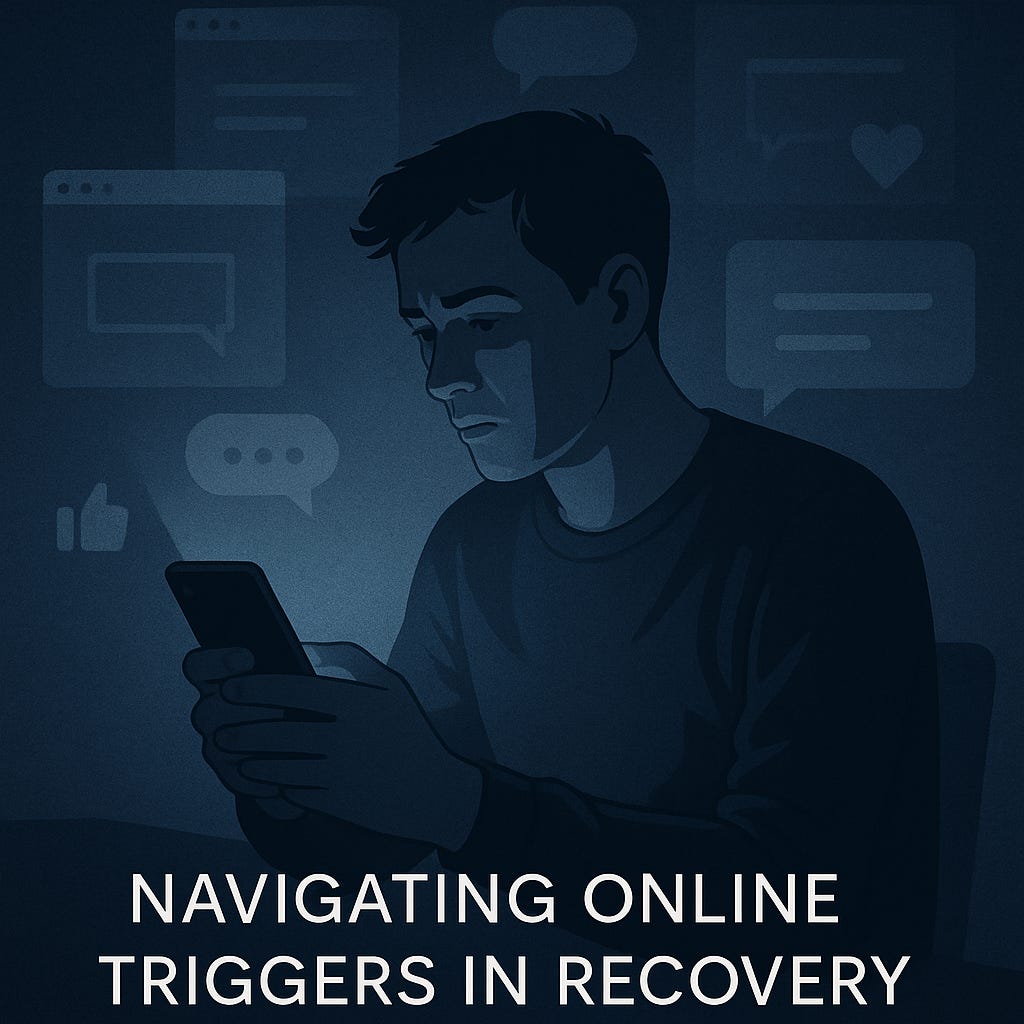
We live in a culture that praises constant access, constant exposure, and constant stimulation. Scroll this. Click that. Open twelve tabs while your brain quietly short-circuits from the chaos of it all.
Most people don’t think twice about it. They scroll past a half-naked influencer or a steamy movie trailer and feel nothing but mild curiosity or amusement. That’s what we call “normal.” But if you’re in recovery from sex and love addiction, that kind of “normal” can be dangerous.
The Lie of “I Should Be Able to Handle This”
One of the most persistent, damaging thoughts I see in recovery work is the belief that healing means immunity. “I should be able to handle this by now.”
Handle what, exactly?
— The targeted Instagram ad with a model in lingerie.
— The emotional hookup scene autoplaying on Netflix.
— The innocent-looking dating app still installed “just in case.”
— The flirtatious DM from someone you don’t even know.
Let’s be clear: this isn’t about being weak. It’s about being honest. Recovery doesn’t mean becoming someone who can flirt with fire and not get burned. It means knowing where the flame is and choosing not to stick your hand in.
The Internet Is Not Neutral
Social media platforms are engineered for dopamine. They’re not built for safety or recovery or boundaries—they’re built to grab and hold your attention. And for those of us wired toward intensity, fantasy, and escape, it’s like walking through a minefield.
Even the most innocent online tasks—shopping for clothes, catching up on news, or watching a friend’s story—can be loaded with triggers. Add in parasocial relationships, thirst traps, and the constant flood of validation-seeking posts, and suddenly your nervous system is hijacked.
You’re not “too sensitive.” You’re reacting to a system that was never designed with your recovery in mind.
Mindful Filters Are Recovery Tools
Some people worry that setting boundaries with online content means they’re avoiding real life. I see it differently. Avoidance is unconscious. This is conscious. This is protection.
Muting or unfollowing accounts that trigger you isn’t censorship—it’s clarity.
Deleting apps that keep you in a craving loop isn’t overreacting—it’s regulation.
Blocking ads, customizing feeds, and stepping away when needed is how you reclaim power from platforms that profit off your dysregulation.
This isn’t a moral issue. It’s a maintenance issue.
Redefining Normal
In the dominant culture, “normal” is being able to scroll past sexualized content without spiraling. “Normal” is flirting online without attachment. “Normal” is dating multiple people without clarity. But if that kind of normal leads you back into obsession, shame, or relapse—why are you chasing it?
In recovery, we don’t chase “normal.” We build sustainable. We build safe. We build ourselves.
Choosing to live differently doesn’t make you fragile. It means you’re paying attention. That’s strength.
Recovery in a Digital World: What Helps
Here are a few practices I recommend to clients and use myself:
Pre-scroll check-in: Ask yourself, “What am I hoping to feel from being online right now?”
Safe startup: Begin your day with a recovery-aligned website, reading, or podcast—before social media.
Create a Safe List: Identify which apps and sites you use when dysregulated, and either block them or replace them with safer options.
Schedule screen breaks: Recovery means noticing when you’re using tech to numb or fantasize. Take intentional breaks to reconnect to your body and breath.
Accountability: Share your digital habits with someone who gets it. Not for shame—just to stay grounded.
You’re Not Behind. You’re Being Brave.
Every time you choose awareness over auto-pilot, you’re doing the work.
Every time you pause instead of spiraling, you’re practicing something powerful.
Every time you admit a trigger, instead of denying it, you’re protecting your recovery.
Recovery doesn’t make you immune. It makes you intentional.
You don’t need to be normal. You need to be real—with yourself, with your limits, and with the life you’re building beyond addiction.
DJ Burr, LMHC, LPC, is a therapist, author, and recovery educator. Learn more at www.djburr.com.